My baskets
You still don't have anything in your shopping cart

My baskets
You still don't have anything in your shopping cart
You still don't have anything in your shopping cart
You still don't have anything in your shopping cart

Temporarily out of stock
 ¡ Buying this product you get {{calculatedProductMenttos()}} menttos !



Bio / Ecological
Bio / Ecological
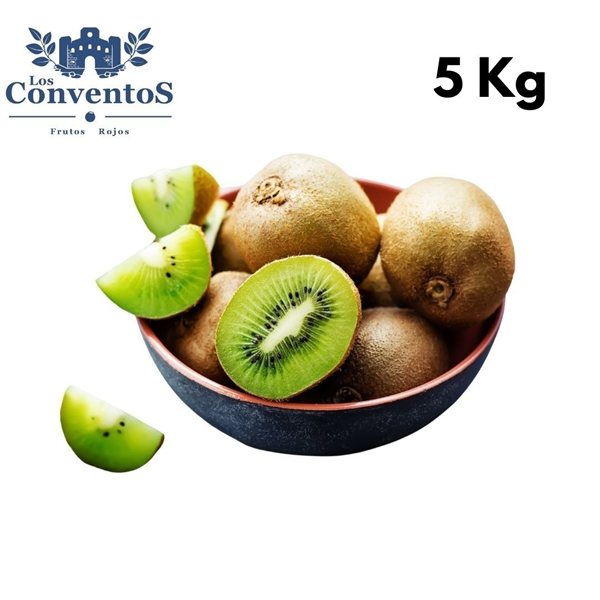
If you're looking for 100% natural seasonal kiwis of enormous quality and delicious flavor, you're in the right place. We're sure you'll love them, so hurry! Buy them now while they're still in season. Read more…
The fruit par excellence for combating constipation and aiding digestion has many properties and helps prevent a multitude of diseases. Moreover, its regular consumption is also recommended for smokers or those who drink a lot of alcohol. It is also beneficial for people with diabetes or allergies, pregnant women or those in menopause, the elderly, those who have suffered fractures or ligament tears, those with vision problems, and those with immunological diseases. As you can see, kiwi is a super healthy fruit that is great for all kinds of people.
Nutritionally, kiwi is very complete; it contains twice as much vitamin C as an orange, double the vitamin E of avocado, and a good amount of vitamin A, but with very few calories—100 grams of kiwi provides 63 calories. In terms of mineral salts, it competes with bananas in potassium content, and it also has magnesium, phosphorus, and chromium, which plays an important role in diabetes and obesity, along with a high amount of folic acid. Additionally, it contains dietary fiber in the form of pectins that help reduce constipation and cholesterol.
It is important to eat the kiwi when it is at the right point of ripeness. If we eat it too early, its taste will be very acidic. To know if a kiwi is ripe, we should gently press it between our index finger and thumb. If the flesh yields slightly to the pressure, the kiwi is ready. If it is hard, it is still green. If it is too soft, it is overripe. The skin should be smooth and taut, and it should have a uniform color. It should not be wrinkled or withered.
Let’s review its benefits, according to the Institute of Food Science and Technology (ICTAN).
Combats constipation
Kiwi is a fruit packed with soluble fiber, which helps with digestion and improves intestinal transit, making it a great ally in preventing constipation. Consuming it at breakfast will enhance this effect.
Aids digestion
Kiwi is very digestible and helps break down the proteins in food, as well as preventing indigestion, gastritis, and gas. The presence of these proteins allows this fruit to be combined with dairy or gelatin.
Rich in antioxidants and vitamin C
They are very rich in this vitamin that helps absorb iron. 100 grams of kiwi provide us with 98 milligrams of vitamin C. Thus, kiwis have more of this vitamin than oranges and lemons, almost double. One kiwi provides more than 80% of the vitamin C that our body needs.
Boosts the immune system
This means preventing colds and boosting defenses, due to the significant amount of vitamin C and folic acid present in kiwi. Both nutrients help produce more red and white blood cells, as well as antibodies, which act as barriers against diseases caused by viruses.
Improves blood circulation
By containing vitamin E and fatty acids, kiwi helps to fluidify the blood, improving the overall condition of the arteries. This prevents the formation of clots in the blood vessels. Therefore, kiwis protect us from thrombosis, angina, strokes, and heart attacks. And as if that weren't enough, kiwi and its fiber help reduce cholesterol levels.
Calories: 61
Total fat: 0.5 g
Cholesterol: 0 mg
Sodium: 3 mg
Potassium: 312 mg
Carbohydrates: 15 g
Protein: 1.1 g
If you're looking for 100% natural seasonal kiwis of enormous quality and delicious flavor, you're in the right place. We're sure you'll love them, so hurry! Buy them now while they're still in season. Read more…
The fruit par excellence for combating constipation and aiding digestion has many properties and helps prevent a multitude of diseases. Moreover, its regular consumption is also recommended for smokers or those who drink a lot of alcohol. It is also beneficial for people with diabetes or allergies, pregnant women or those in menopause, the elderly, those who have suffered fractures or ligament tears, those with vision problems, and those with immunological diseases. As you can see, kiwi is a super healthy fruit that is great for all kinds of people.
Nutritionally, kiwi is very complete; it contains twice as much vitamin C as an orange, double the vitamin E of avocado, and a good amount of vitamin A, but with very few calories—100 grams of kiwi provides 63 calories. In terms of mineral salts, it competes with bananas in potassium content, and it also has magnesium, phosphorus, and chromium, which plays an important role in diabetes and obesity, along with a high amount of folic acid. Additionally, it contains dietary fiber in the form of pectins that help reduce constipation and cholesterol.
It is important to eat the kiwi when it is at the right point of ripeness. If we eat it too early, its taste will be very acidic. To know if a kiwi is ripe, we should gently press it between our index finger and thumb. If the flesh yields slightly to the pressure, the kiwi is ready. If it is hard, it is still green. If it is too soft, it is overripe. The skin should be smooth and taut, and it should have a uniform color. It should not be wrinkled or withered.
Let’s review its benefits, according to the Institute of Food Science and Technology (ICTAN).
Combats constipation
Kiwi is a fruit packed with soluble fiber, which helps with digestion and improves intestinal transit, making it a great ally in preventing constipation. Consuming it at breakfast will enhance this effect.
Aids digestion
Kiwi is very digestible and helps break down the proteins in food, as well as preventing indigestion, gastritis, and gas. The presence of these proteins allows this fruit to be combined with dairy or gelatin.
Rich in antioxidants and vitamin C
They are very rich in this vitamin that helps absorb iron. 100 grams of kiwi provide us with 98 milligrams of vitamin C. Thus, kiwis have more of this vitamin than oranges and lemons, almost double. One kiwi provides more than 80% of the vitamin C that our body needs.
Boosts the immune system
This means preventing colds and boosting defenses, due to the significant amount of vitamin C and folic acid present in kiwi. Both nutrients help produce more red and white blood cells, as well as antibodies, which act as barriers against diseases caused by viruses.
Improves blood circulation
By containing vitamin E and fatty acids, kiwi helps to fluidify the blood, improving the overall condition of the arteries. This prevents the formation of clots in the blood vessels. Therefore, kiwis protect us from thrombosis, angina, strokes, and heart attacks. And as if that weren't enough, kiwi and its fiber help reduce cholesterol levels.
Calories: 61
Total fat: 0.5 g
Cholesterol: 0 mg
Sodium: 3 mg
Potassium: 312 mg
Carbohydrates: 15 g
Protein: 1.1 g