My baskets
You still don't have anything in your shopping cart

My baskets
You still don't have anything in your shopping cart
You still don't have anything in your shopping cart
You still don't have anything in your shopping cart

{{getOldPrice()}}{{getPrice()}}
 ¡ Buying this product you get {{calculatedProductMenttos()}} menttos !
Net weight:
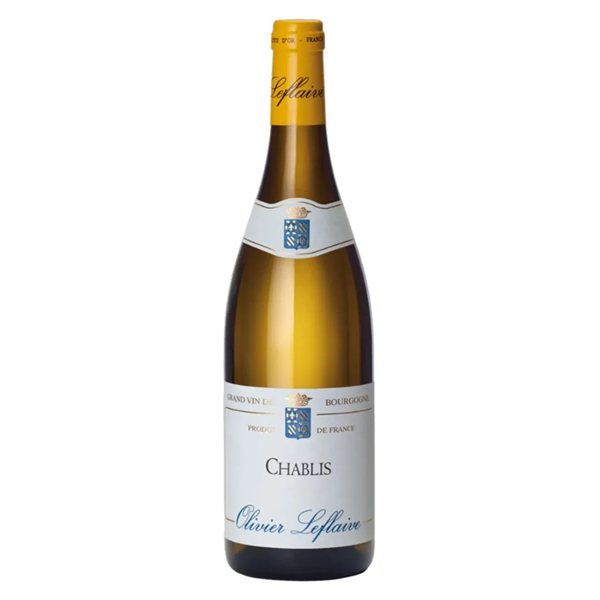
Chablis still white wine, 1er Cru Montée de Tonnerre, 12.5 % vol., made by Olivier Leflaive in Burgundy, France. 100% Chardonnay, vintage 2023. A wine that embodies the elegance and minerality of Chablis, with a family history rooted in the heart of Burgundy. The grapes are carefully pressed and aged for 12 months, four months in stainless steel and the rest in oak barrels. Granny Smith apples, along with citrus notes, open the bouquet, which then evolves into mineral notes and hints of white flowers. Intense straw yellow color. Balance between freshness and structure, with good persistence.
The Leflaive family has always had a few hectares of vineyards in Burgundy, in addition to their farm. Immediately after World War I, Olivier's grandfather, Joseph Leflaive, faced the bankruptcy of his Saint-Etienne steelworks. His investments in Burgundy were all he had left and he decided to expand his wine estate. It became a family farm of about 35 hectares. In 1953, his son Joseph Régis decided to take over the reins of the farm, which soon began to produce top quality wines in the 1970s. It was an important step for the winegrowers of this village located two meters above the water table and therefore lacking subway cellars.
Net weight:
Chablis still white wine, 1er Cru Montée de Tonnerre, 12.5 % vol., made by Olivier Leflaive in Burgundy, France. 100% Chardonnay, vintage 2023. A wine that embodies the elegance and minerality of Chablis, with a family history rooted in the heart of Burgundy. The grapes are carefully pressed and aged for 12 months, four months in stainless steel and the rest in oak barrels. Granny Smith apples, along with citrus notes, open the bouquet, which then evolves into mineral notes and hints of white flowers. Intense straw yellow color. Balance between freshness and structure, with good persistence.
The Leflaive family has always had a few hectares of vineyards in Burgundy, in addition to their farm. Immediately after World War I, Olivier's grandfather, Joseph Leflaive, faced the bankruptcy of his Saint-Etienne steelworks. His investments in Burgundy were all he had left and he decided to expand his wine estate. It became a family farm of about 35 hectares. In 1953, his son Joseph Régis decided to take over the reins of the farm, which soon began to produce top quality wines in the 1970s. It was an important step for the winegrowers of this village located two meters above the water table and therefore lacking subway cellars.