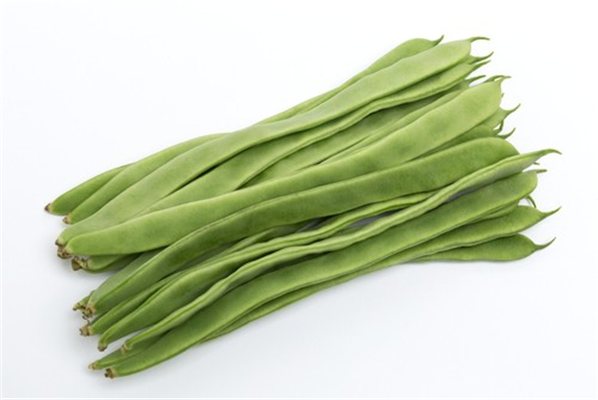
Origin: SPAIN Variety: PERONA Size: M Category: 1st Weight per 1/2 kg: 0.000 Kg The price per kg is: €11.97
Here's the translation of the provided text into English:
Green Beans belong to the Fabaceae family and to the subfamily of Papilionaceae. They require a temperate, tropical, or subtropical climate to grow.
Green Beans are the pods of the beans, and inside are the seeds, which, when developed and dried, become the dried beans. They can have different shapes: flat, round, or cord-like, and in the shape of an eight.
Green Beans have been cultivated for 5,000 years. They are native to Mexico and Peru, although some believe they originated in Asia, India, and China. The fact is that Spanish conquerors discovered them when they arrived in Mexico, and in the 16th century, they brought them to Spain. From Spain, their consumption spread to the rest of Europe.
It wasn't until the 19th century that people started eating the green pod; previously, only the seed or dried bean was consumed. Currently, it is one of the most cultivated and consumed vegetables worldwide, due to its delicious taste and important properties.
Health and Properties of Green Beans
Season and Varieties of Green Beans
Recipes with Green Beans
Green Beans contain 90% water, carbohydrates (starch), are rich in fiber, proteins, contain no fat, few lipids, and minimal calories, making them ideal for diets.
Those suffering from gout, arthritis, and kidney stones, thanks to folic acid.
Anemias, due to its iron and calcium content.
Cholesterol.
Anti-cancer properties,
Immune system: boosts defenses and the creation of antibodies.
Intestinal transit.
Diuretic and purifying
Hypertension.
Kidney stones and uric acid.
As we have mentioned, Green Beans can be flat, round, or cord-like. What we eat from green beans are the pods. Each pod contains 5 or 6 seeds, which are not fully developed.
The varieties can be early, mid-season, or late harvest. Regarding market consumption:
Perona green beans: they are flat, wide, and long, tender and stringless: good cooking quality.
Elda green beans: flat pods, wide but shorter than the Perona; tender and stringless. Cooks well.
Boby green beans (or bobby) and Emerite: the pod is tubular, smaller than the Elda or Perona. It is thick and meaty.
Rastra green beans or horseshoe shaped, flat and curved, very fine, irregular size, very tender (although they may have strings), there is very little in the markets, used for preservation.
Fine green beans: they refer to the beans of the Elda and Perona varieties when they are slightly beaded (without grains and protrusions
Translated automatically
More information
Origin: SPAIN Variety: PERONA Size: M Category: 1st Weight per 1/2 kg: 0.000 Kg The price per kg is: €11.97
Here's the translation of the provided text into English:
Green Beans belong to the Fabaceae family and to the subfamily of Papilionaceae. They require a temperate, tropical, or subtropical climate to grow.
Green Beans are the pods of the beans, and inside are the seeds, which, when developed and dried, become the dried beans. They can have different shapes: flat, round, or cord-like, and in the shape of an eight.
Green Beans have been cultivated for 5,000 years. They are native to Mexico and Peru, although some believe they originated in Asia, India, and China. The fact is that Spanish conquerors discovered them when they arrived in Mexico, and in the 16th century, they brought them to Spain. From Spain, their consumption spread to the rest of Europe.
It wasn't until the 19th century that people started eating the green pod; previously, only the seed or dried bean was consumed. Currently, it is one of the most cultivated and consumed vegetables worldwide, due to its delicious taste and important properties.
Health and Properties of Green Beans
Season and Varieties of Green Beans
Recipes with Green Beans
Green Beans contain 90% water, carbohydrates (starch), are rich in fiber, proteins, contain no fat, few lipids, and minimal calories, making them ideal for diets.
Those suffering from gout, arthritis, and kidney stones, thanks to folic acid.
Anemias, due to its iron and calcium content.
Cholesterol.
Anti-cancer properties,
Immune system: boosts defenses and the creation of antibodies.
Intestinal transit.
Diuretic and purifying
Hypertension.
Kidney stones and uric acid.
As we have mentioned, Green Beans can be flat, round, or cord-like. What we eat from green beans are the pods. Each pod contains 5 or 6 seeds, which are not fully developed.
The varieties can be early, mid-season, or late harvest. Regarding market consumption:
Perona green beans: they are flat, wide, and long, tender and stringless: good cooking quality.
Elda green beans: flat pods, wide but shorter than the Perona; tender and stringless. Cooks well.
Boby green beans (or bobby) and Emerite: the pod is tubular, smaller than the Elda or Perona. It is thick and meaty.
Rastra green beans or horseshoe shaped, flat and curved, very fine, irregular size, very tender (although they may have strings), there is very little in the markets, used for preservation.
Fine green beans: they refer to the beans of the Elda and Perona varieties when they are slightly beaded (without grains and protrusions