My baskets
You still don't have anything in your shopping cart

My baskets
You still don't have anything in your shopping cart
You still don't have anything in your shopping cart
You still don't have anything in your shopping cart
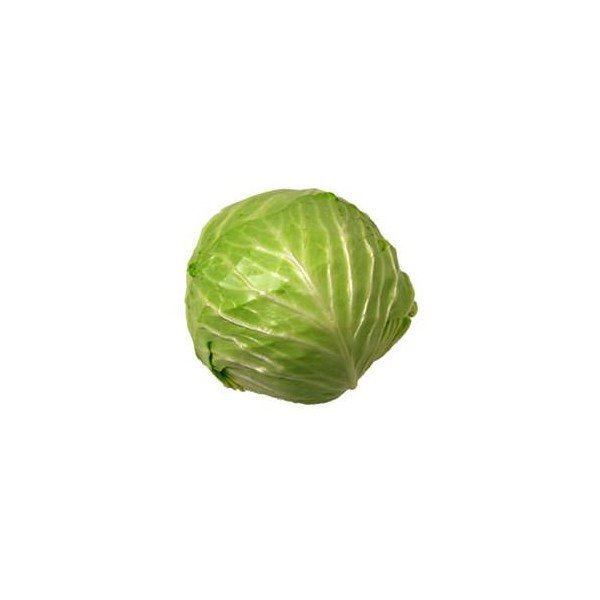


Temporarily out of stock
 ¡ Buying this product you get {{calculatedProductMenttos()}} menttos !
Net weight:
Cabbage is native to Europe. There is evidence that the Celts, Greeks and Romans already consumed it and the latter used it for intestinal and pulmonary problems and to increase milk in nursing mothers. There is also evidence that the discoverers took it to America to plant their vegetables and legumes. What is not known is if it already existed, because in American lands there was a genus called quelites, which encompassed a lot of wild vegetables that the Indians consumed.
Brussels sprouts are native to northern Europe, specifically in northern France and Belgium, hence its name for Brussels, the capital of Belgium. And they need a cold and humid climate to be cultivated. The countries that consume them the most are: France, Belgium, Holland, Germany and the United Kingdom.
Cabbage belongs to the Cruciferae family and is grown in fields. There are many species of this genus, but from the same family we have the Brussels sprouts, the Broccoli, the Cabbage and Cauliflower. They need temperate climates. They all contain Sulfur, which is a potent antioxidant.
Health / Properties of Cabbages
Season and Varieties of Cabbages or Cabbage
Cabbage or Cabbage Recipes
Cabbage or Cabbage, contains 92% water, fiber, few calories and carbohydrates
Benefits and properties Recommended for:
There are more than 380 genera and 3.000 species, but there are 3 varieties of cabbages that are commercially available:
To the cruciferous family, they also belong (all possess the same active components), with some differences:
Best time for consumption: Cabbages have their best season between the months of September and January, although they are bought in the markets all year round.
Buying tips: cabbage should be clean, firm and compact, with green and tender leaves. Discard specimens with brownish spots, or soft parts (sign of old cabbages). Also do not buy cabbage with specks (signs of fungus or insects in the cabbage).
Storage: fresh and healthy cabbage should be stored in the refrigerator, wrapped in a perforated plastic bag for about a week. Do not wash until ready to consume. To freeze: select those heads that are firmer and whiter by blanching them in boiling water. They can be frozen for about 8 months.
For all its properties, it is a vegetable that should be much more widely consumed in Spain nowadays, as it is in the rest of Europe.
Perhaps the most used in Spain are the cucumbers and the cauliflower.
In France, Germany, France, Belgium and Holland the most used are Brussels sprouts, with which they make exquisite dishes.
Cabbage or cabbage is used to make preserves, sauerkraut, pickles...All of them can be frozen, once cooked or boiled.



