Broad beans contain: - Vitamins: C, A, E, B1, B2.
- Minerals: high in Potassium, Phosphorus, Sodium, Calcium
- Others: antioxidants, lecithin, choline, carbohydrates, proteins, many calories, fiber, beta carotene, antioxidants.
Properties - benefits.Recommended for: - Cholesterol: absorbs fat deposited in the veins.
- Diuretic: if infusions are made with their flowers.
- Alzheimer's, thanks to lecithin and choline.
- Detoxifying: anti-rheumatic, infusion with their flowers.
- Boils, paronychia: for topical use, with the water from boiling their leaves.
- Afrodisiac (historical Roman legend)
- Promotes intestinal transit.
| Broad beans are classified into 3 varieties: - Vicia faba variety minor.
- Vicia faba variety equina.
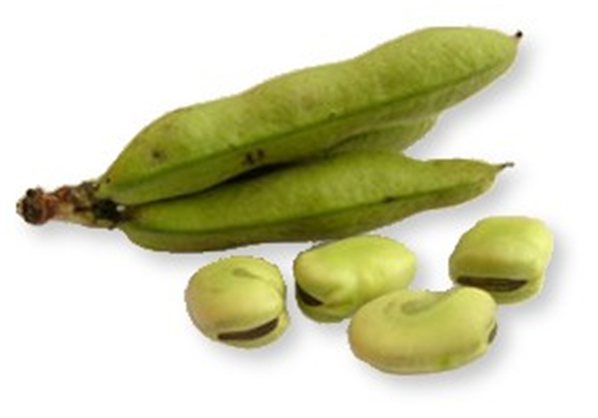
- Vicia faba variety major: this is consumed fresh, and this group includes the most commonly consumed broad bean classes such as: Aguadulce, Muchamiel, Granadian, Reina Blanca, Reina Mora, Mahón.
Best time: best season from January to June (Spain) Tips for buying: When buying them, we should look for pods that are firm, bright green in color, and that snap and crack when bent. If they bend or look wilted, it's a bad sign, and we shouldn't buy them. Storage: Fresh broad beans can be kept at room temperature for 3 to 4 days; it is advisable to store them in a cool, dry place protected from light. If we put them in the fridge, they can last even a week. | Broad beans are consumed both raw and cooked. In Murcia and in some places in Andalusia, they are eaten raw as an appetizer with dried cod or mojama, ham... They are also cooked in very typical dishes like "michirones". Cooked broad beans are usually sautéed, stir-fried with bacon or ham, in vegetable mixes, stewed, and in modern cuisine, some salads have been made based on broad beans: Broad beans with Foie, for example, delicious! |