How to choose Iberian ham: seals, labels and tips for Christmas
/ All articles / Tips

Knowing how to choose Iberian ham comes down to three things: the colour of the seal, the sales name on the label (which tells you how the pig was fed and what percentage of Iberian breed it has) and whether a whole leg or sliced ham suits you better. Here’s how to read every detail so you get it right this Christmas, and how to tell a good ham before you even taste it.
What Iberian ham is (and what it isn’t)
Iberian ham, or jamón ibérico, comes from Iberian-breed pigs, either purebred or crossbred with at least 50% Iberian breed. In Spain, its quality and labelling are regulated by the Iberian quality standard (Royal Decree 4/2014). Serrano ham, on the other hand, comes from white pigs: it’s a different product, with a different way of raising the animals and a different flavour.
Within Iberian ham there are big differences. What really changes the result on the plate is how the pig lived and what it ate, and how long the ham has been cured.
How to choose Iberian ham by the colour of the seal
Every Iberian ham and shoulder carries a seal, a tag with a unique number that lets you trace it. Its colour tells you at a glance what you’re buying:
| Seal | Sales name on the label | What it means |
|---|---|---|
| Black | Jamón de bellota 100 % ibérico (100% Iberian acorn-fed ham) | Purebred Iberian pig, fattened on acorns and grass in the dehesa (Spanish oak pastureland) during the montanera season. The only one that can be called “pata negra”. |
| Red | Jamón de bellota ibérico (Iberian acorn-fed ham) | Fattened on acorns and grass in the dehesa, but from a crossbred Iberian pig (50% or 75% Iberian breed). |
| Green | Jamón de cebo de campo ibérico (Iberian free-range ham) | Pig raised outdoors, fed on grass and feed. |
| White | Jamón de cebo ibérico (Iberian grain-fed ham) | Pig raised on a farm and fed on feed. |
What if you buy it sliced? Packs don’t carry a seal, but the label on the pack must be the same colour as the seal on the ham the slices come from.
How to read an Iberian ham label
The label is your best ally when you want to choose Iberian ham without getting it wrong. The sales name always combines three pieces of information: the product (jamón for ham or paleta for shoulder), the feeding (de bellota, acorn-fed; de cebo de campo, free-range; or de cebo, grain-fed) and the percentage of Iberian breed (100%, 75% or 50%). For example: “Jamón de bellota 75 % ibérico”. It must appear in full and be clearly visible, in the same field of vision as the brand.
A few more clues:
- “Pata negra” can only appear on 100% Iberian acorn-fed ham.
- “Dehesa” or “montanera” can only be used on acorn-fed products.
- Be wary of pictures of acorns or oak trees on a ham that isn’t acorn-fed.
- The colour of the hoof is no guarantee. The label and the seal are what count.
Ham or shoulder: which to choose
Ham (jamón) is the pig’s hind leg and shoulder (paleta) is the front leg. The shoulder is smaller and usually more affordable, but it has more bone in proportion, so you get less meat from it. And by law, Iberian ham is cured for longer: at least 600 days if it weighs under 7 kg and 730 days if it weighs 7 kg or more, while the shoulder needs at least 365 days.
If there aren’t many of you at home, or you want a treat without a huge leg, an Iberian shoulder is a great option. If you’re after the star of your Christmas table and still wondering how to choose Iberian ham, go for an acorn-fed Iberian ham.
Whole leg or sliced?
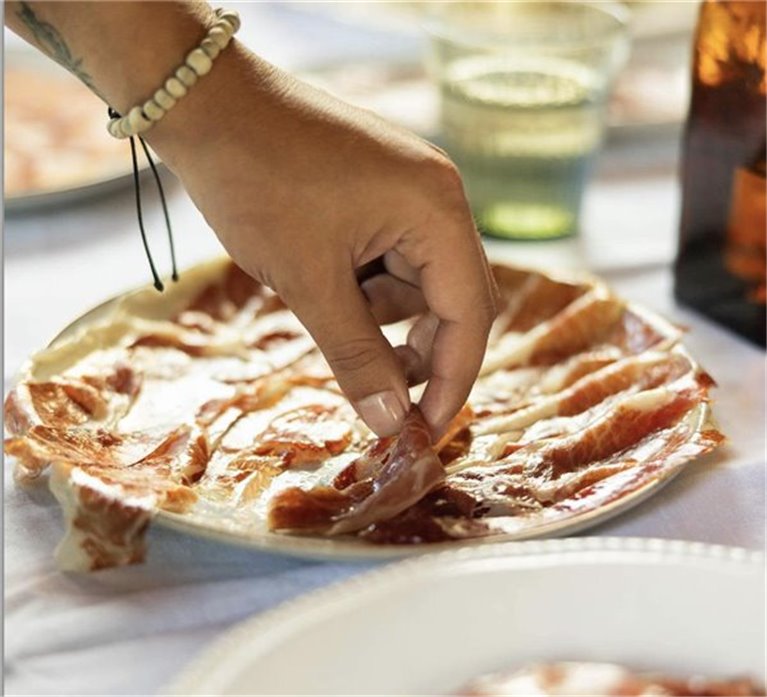
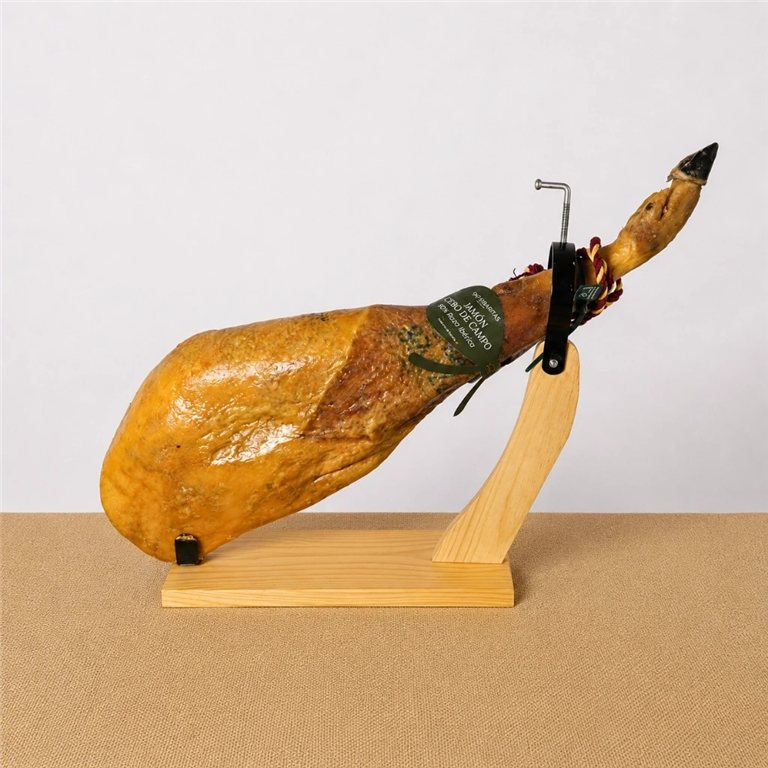
Whole leg
- Ideal for long get-togethers and big families.
- You’ll need a ham stand, a good knife and someone who knows how to carve (or is keen to learn).
- Once started, it’s best eaten within a few weeks.
Sliced
- Convenient, no waste and ready to serve.
- Perfect if there are only a few of you, as a gift or to send far away.
- A tip: take it out of the pack a little while before eating so the fat warms up and releases all its aroma.
If you’re thinking of giving it as a gift, we tell you what travels best in our guide to Spanish food gifts.
How to tell if an Iberian ham is good
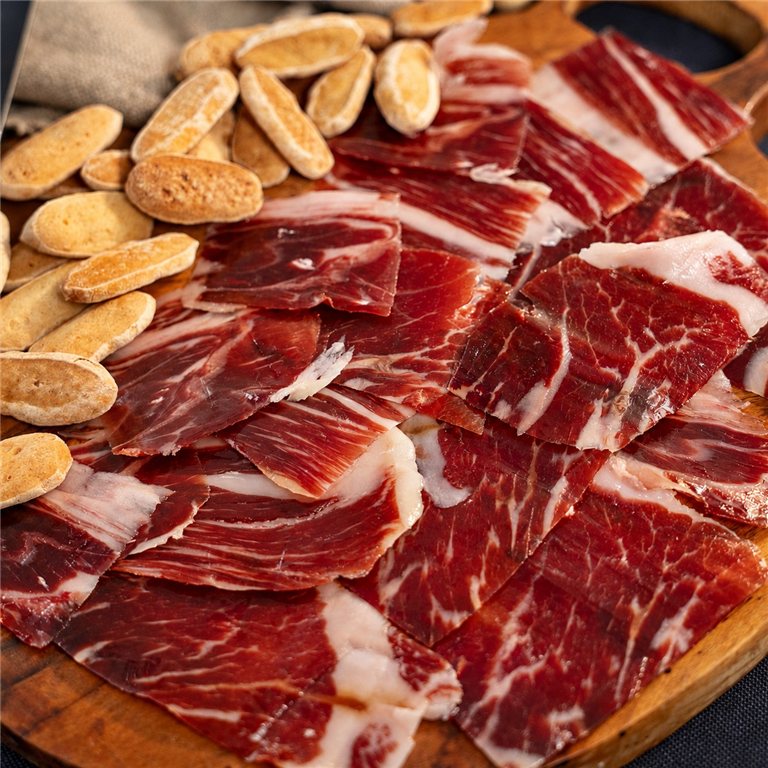
The label tells you what it is; your senses tell you if it’s good. Look out for:
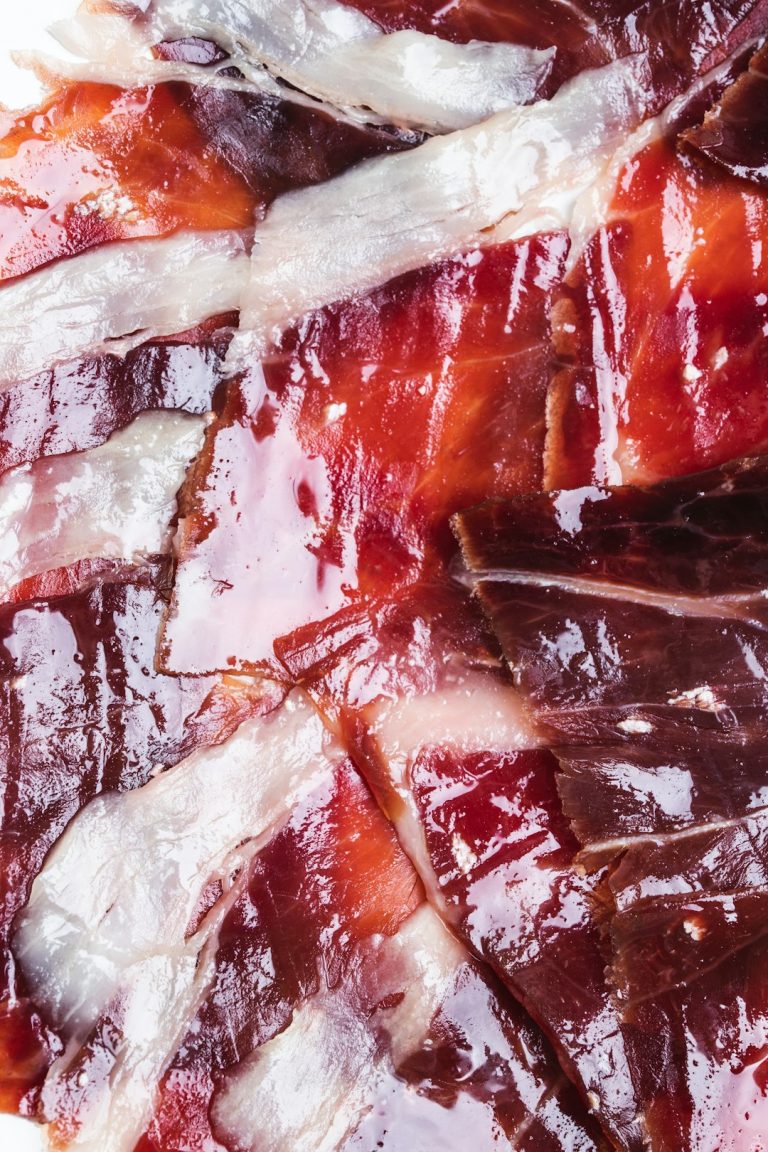
- Marbling. The streaks of fat running through the meat are what make it juicy.
- The fat. Glossy, silky, and melting at the warmth of your fingers.
- The colour. From deep pink to purplish red.
- Tiny white dots. They’re tyrosine crystals, typical of long curing. A good sign.
- The aroma. Intense, clean, of slow curing.
And above all, knowing who made it. When the ham comes straight from the curing house, you know where it’s from and how long it’s been curing. We explain how in how to buy directly from producers online.
Frequently asked questions about how to choose Iberian ham
What does a black seal on a ham mean?
That it’s a 100% Iberian acorn-fed ham (jamón de bellota 100 % ibérico): from a purebred Iberian pig fattened on acorns in the dehesa. It’s the top category in the Iberian quality standard.
What’s the difference between acorn-fed, free-range and grain-fed Iberian ham?
How the pig is fed and raised. Acorn-fed (de bellota) pigs are fattened in the dehesa on acorns and grass; free-range (de cebo de campo) pigs live outdoors and eat grass and feed; grain-fed (de cebo) pigs are raised on farms on feed.
Is “pata negra” the same as Iberian ham?
No. “Pata negra” can only be used for 100% Iberian acorn-fed ham, the one with the black seal. Not all Iberian hams are pata negra.
How long is Iberian ham cured?
According to the quality standard, at least 600 days if it weighs under 7 kg and 730 days if it weighs 7 kg or more. Iberian shoulder, at least 365 days. Many producers cure their hams for much longer.
Where can I buy Iberian ham online?
On Mentta you’ll find Iberian ham, shoulder and sliced ham from producers and specialist shops all over Spain, who prepare and ship your order straight to your door. At checkout you’ll see whether a product can be delivered to your country.
Mentta. The online market for people who know what things should taste like.