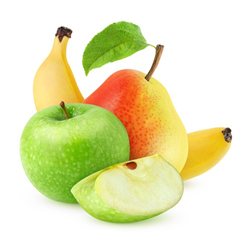
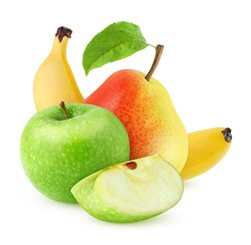
It is one of the most popular fruits and is available year-round. Traditionally, it was known as "the fruit of health." In English, it is said: An apple a day keeps the doctor away.
Properties of Apples / Health
They are rich in pectin (a good ally against cholesterol and diabetes), amino acids, acids, sugars, and fibers. They are popularly attributed with anti-inflammatory properties for the digestive system; thanks to pectin, they are both a mild laxative and an astringent in cases of diarrhea or colitis, diuretic and detoxifying, and even anti-catarhal and hypotensive. Apple juice is frequently presented as a beauty product, capable of softening the skin. They help burn fat.
Preparation / Preservation
Keep them in plastic bags in the refrigerator after purchase to prevent further ripening. Apples can be stored like this for up to about six weeks. However, check them often and remove any apple that starts to go bad.
Wash them well and rinse with water. Prepare apple dishes just before serving to minimize browning (oxidation). Protect cut apples from oxidation by immersing them in a solution of one part citrus juice and three parts water.
Nutritional Information Of Apples
Varieties
Apple Recipes
1 apple (154 g.)
Calories 80 Calories from fat: 0 0% Total Fat 0 g. 0% Saturated Fat: 0g 0% Cholesterol: 0 mg. 0% Sodium: 0 mg. 0% Total Carbohydrates: 22 g. 7% Dietary Fiber: 5g 20% Sugars: 16 g Protein: 0 g Vitamin A: 2% Vitamin C: 8% Calcium: 0% Iron: 2%
Source: National Center for Chronic Disease Prevention and Health Promotion
BEST SEASONGiven the numerous varieties of apples, most can be found in the market from September to June, except for the Golden Supreme, which is available from August to November, or the Golden Delicious, which can be found almost year-round.
CHARACTERISTICSShape: they are generally pomaceous, oval-shaped, sometimes elongated or round, hiding numerous brown seeds inside. Their skin is almost always shiny and smooth.Size and weight: the most marketed apples are those with a size ranging from 75 millimeters to 85 or more, and their weight varies from 170 grams to 250 grams.Color: the different skin colors categorize the fruits into four groups: green, red, yellow, and bicolored. All of them have different flavors, aromas, and flesh quality.Flavor: the flesh can be hard or soft but is always refreshing and juicy, and its flavor ranges from very sweet to very sour, with a mix of sweet and tart tastes. The flesh is more or less aromatic depending on the variety.
The apple is a fruit that attracts attention in markets because it can be found almost year-round in excellent quality conditions and ready to eat. This is possible due to good handling and preservation practices that exist today. After harvesting, apples that will be stored undergo various preservation methods, such as rapid cooling of the fruit, storage in boxes with plastic films, and controlled refrigeration, which reduce water loss and prevent the skin of the apple from wrinkling.
Early Red One: has a very good appearance and a shiny skin of intense red. Its flesh is juicy, slightly aromatic but very sweet. It is available in the market from September to June.Top Red: is red with stripes and has a shiny skin. The flesh is firm although it can become mealy over time. Its flavor is sweet and is available from September to June.Red Delicious: is an American variety that produces large, elongated fruits with bright red skin. Its flesh is juicy, very soft, sweet, non-acidic, and very aromatic.Starking: is
Translated automatically
More information
The price shown is an estimate based on the weight of the product. The final price will depend on the weight of the delivered product.
It is one of the most popular fruits and is available year-round. Traditionally, it was known as "the fruit of health." In English, it is said: An apple a day keeps the doctor away.
Properties of Apples / Health
They are rich in pectin (a good ally against cholesterol and diabetes), amino acids, acids, sugars, and fibers. They are popularly attributed with anti-inflammatory properties for the digestive system; thanks to pectin, they are both a mild laxative and an astringent in cases of diarrhea or colitis, diuretic and detoxifying, and even anti-catarhal and hypotensive. Apple juice is frequently presented as a beauty product, capable of softening the skin. They help burn fat.
Preparation / Preservation
Keep them in plastic bags in the refrigerator after purchase to prevent further ripening. Apples can be stored like this for up to about six weeks. However, check them often and remove any apple that starts to go bad.
Wash them well and rinse with water. Prepare apple dishes just before serving to minimize browning (oxidation). Protect cut apples from oxidation by immersing them in a solution of one part citrus juice and three parts water.
Nutritional Information Of Apples
Varieties
Apple Recipes
1 apple (154 g.)
Calories 80 Calories from fat: 0 0% Total Fat 0 g. 0% Saturated Fat: 0g 0% Cholesterol: 0 mg. 0% Sodium: 0 mg. 0% Total Carbohydrates: 22 g. 7% Dietary Fiber: 5g 20% Sugars: 16 g Protein: 0 g Vitamin A: 2% Vitamin C: 8% Calcium: 0% Iron: 2%
Source: National Center for Chronic Disease Prevention and Health Promotion
BEST SEASONGiven the numerous varieties of apples, most can be found in the market from September to June, except for the Golden Supreme, which is available from August to November, or the Golden Delicious, which can be found almost year-round.
CHARACTERISTICSShape: they are generally pomaceous, oval-shaped, sometimes elongated or round, hiding numerous brown seeds inside. Their skin is almost always shiny and smooth.Size and weight: the most marketed apples are those with a size ranging from 75 millimeters to 85 or more, and their weight varies from 170 grams to 250 grams.Color: the different skin colors categorize the fruits into four groups: green, red, yellow, and bicolored. All of them have different flavors, aromas, and flesh quality.Flavor: the flesh can be hard or soft but is always refreshing and juicy, and its flavor ranges from very sweet to very sour, with a mix of sweet and tart tastes. The flesh is more or less aromatic depending on the variety.
The apple is a fruit that attracts attention in markets because it can be found almost year-round in excellent quality conditions and ready to eat. This is possible due to good handling and preservation practices that exist today. After harvesting, apples that will be stored undergo various preservation methods, such as rapid cooling of the fruit, storage in boxes with plastic films, and controlled refrigeration, which reduce water loss and prevent the skin of the apple from wrinkling.
Early Red One: has a very good appearance and a shiny skin of intense red. Its flesh is juicy, slightly aromatic but very sweet. It is available in the market from September to June.Top Red: is red with stripes and has a shiny skin. The flesh is firm although it can become mealy over time. Its flavor is sweet and is available from September to June.Red Delicious: is an American variety that produces large, elongated fruits with bright red skin. Its flesh is juicy, very soft, sweet, non-acidic, and very aromatic.Starking: is